2nd Chile–California Mission: Strengthening binational cooperation in wildfire Prevention and management
Between October 27 and 30, 2025, the 2nd Chile–California Mission on Wildfire Prevention, Management, and Emerging Technologies took place in Santiago and Concepción. The mission was organized by the Chile California Council together with the Chilean Ministry of Foreign Affairs.
The initiative aimed to deepen collaboration between Chile and California in wildfire prevention and management, promoting knowledge exchange—this year with special focus on new technologies that can support climate and territorial resilience in both regions.
Lessons from the historic Los Angeles wildfire of January 2025, along with California’s ongoing prevention and community-based efforts, guided the meetings and conferences throughout the mission.
A week of joint work across public, private, academic, and community sectors
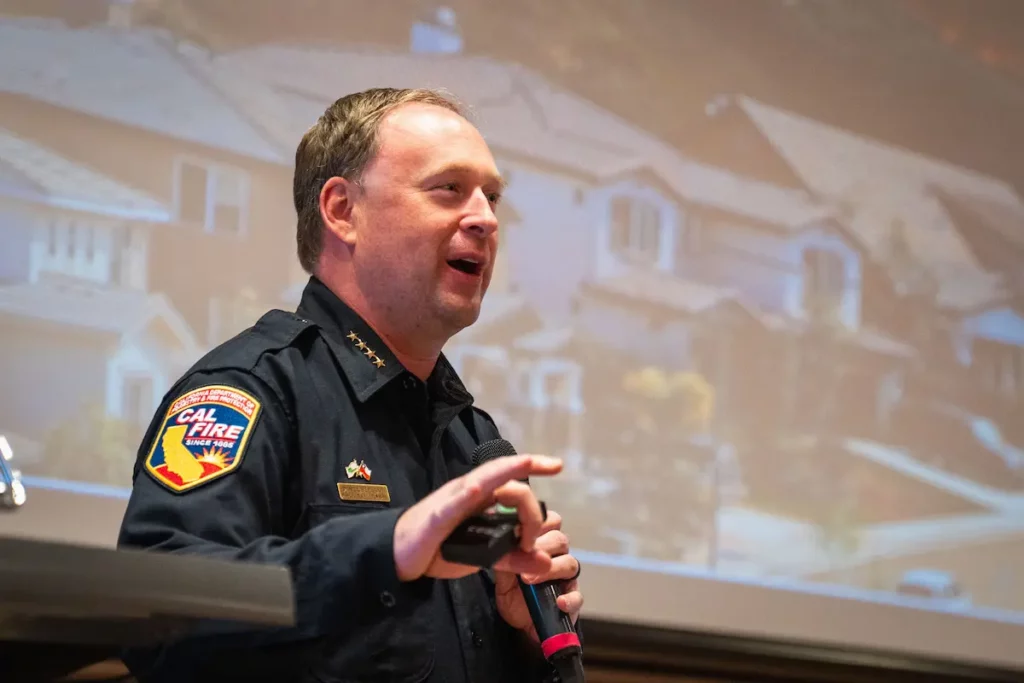
The mission brought to Chile a delegation of Californian representatives from both government and industry, including officials from CAL FIRE, led by:
- Daniel Berlant — State Fire Marshal of California
- Nathan Barclay — Deputy Director of Fire Protection
- Helen López — Deputy Director of Tribal Affairs
- Christopher Anthony — Former CAL FIRE Director, now Executive Director of Fire WERX and technology advisor at Earth Fire Alliance, a global nonprofit coalition developing technologies for near-real-time wildfire data accessibility
- Brian Collins — Executive Director of Earth Fire Alliance
Seneca was represented by Andrew Karn, Head of Public Safety Partnerships, showcasing emerging wildfire defense technologies used in California, combining autonomous drones, advanced sensors, and AI to detect and suppress fires before they spread.
Participants from Chile included teams from CONAF and SENAPRED, along with electrical and forestry companies (CORMA), CMPC, Arauco, universities, community networks such as the Red de Prevención Comunitaria, and various technology actors.
Over four days in Santiago and Concepción, the delegation took part in a high-level agenda that included:
- Strategic meetings with CONAF and SENAPRED to strengthen technical cooperation and joint planning for the CAL FIRE–CONAF Memorandum of Understanding.
- A session with electrical companies to address innovations in detection, monitoring, and risk mitigation.
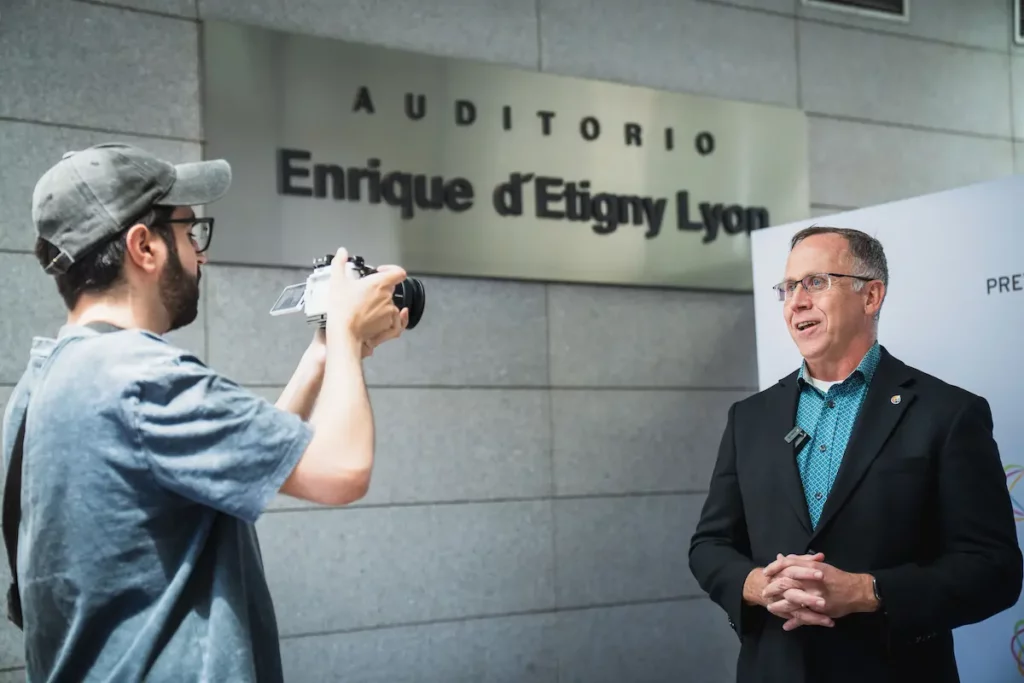
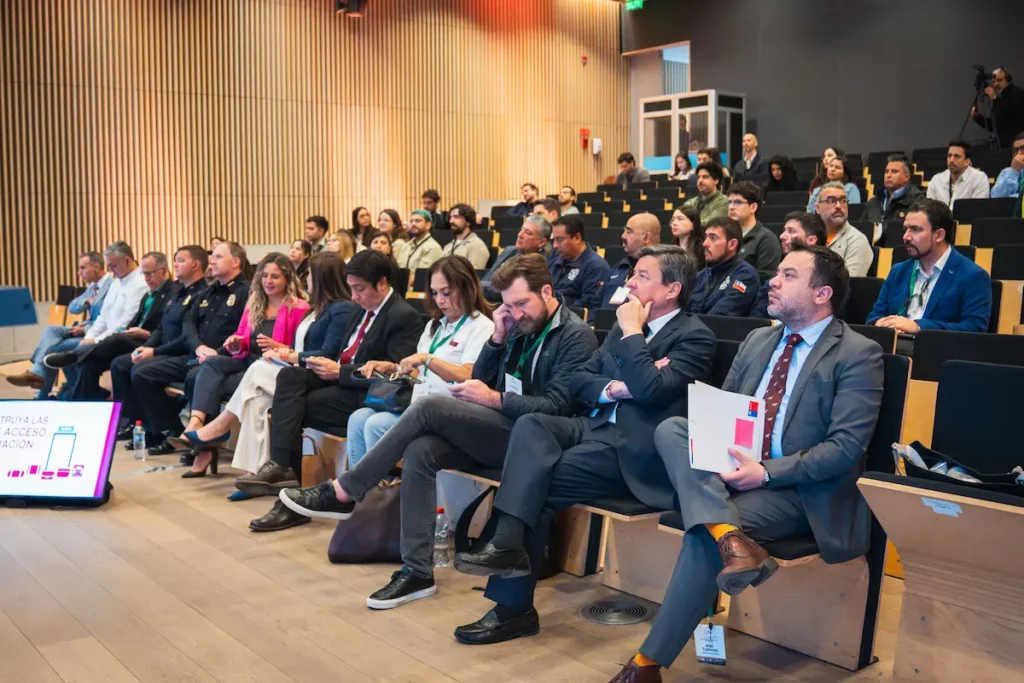
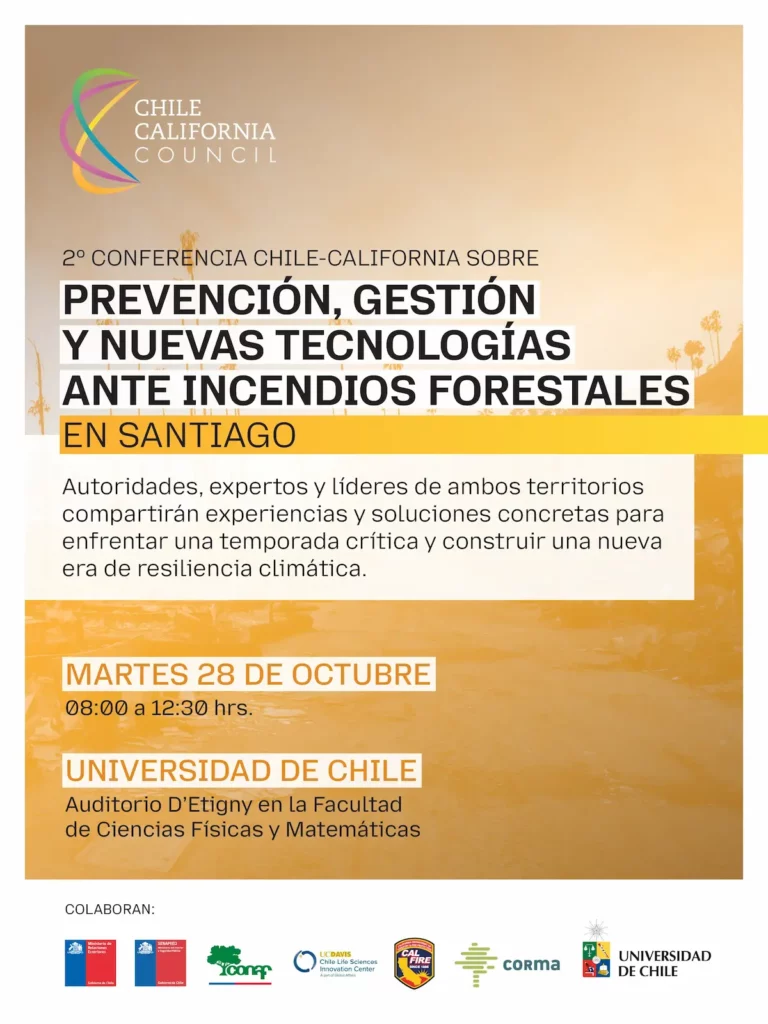
- The 2nd Chile–California Conference at the University of Chile, where experts and authorities discussed public policy, technology, and community-level prevention.
- An academic roundtable at the Pontificia Universidad Católica de Chile exploring new opportunities for scientific collaboration and training in fire management.
- Technical field visits in the Biobío Region with CMPC and Arauco, focused on technology, field operations, and preventive management in forest landscapes.
- A community-oriented activity with the Red de Prevención Comunitaria.
- The Southern Macrozone Conference at the University of Concepción, with CORMA, SENAPRED, and CONAF analyzing regional challenges and the importance of coordinated work across sectors.
Building a long-term climate resilience agenda
The 2025 Mission continued the strengthened Disaster Risk Management collaboration established since 2024, enabling renewed cooperation through CAL FIRE visits, international seminars, and institutional dialogue.
The Chile California Council reaffirms its commitment to bilateral collaboration and capacity-building to confront climate change, land management challenges, and wildfire prevention.
Collaborators:
MINREL · CONAF · SENAPRED · CORMA · UC Davis · Universidad de Chile · Pontificia Universidad Católica · University of Concepción · CMPC · Arauco · Itrend · Empresas Eléctricas · U.S. Embassy · Red de Prevención Comunitaria